
Laser tattoo removal
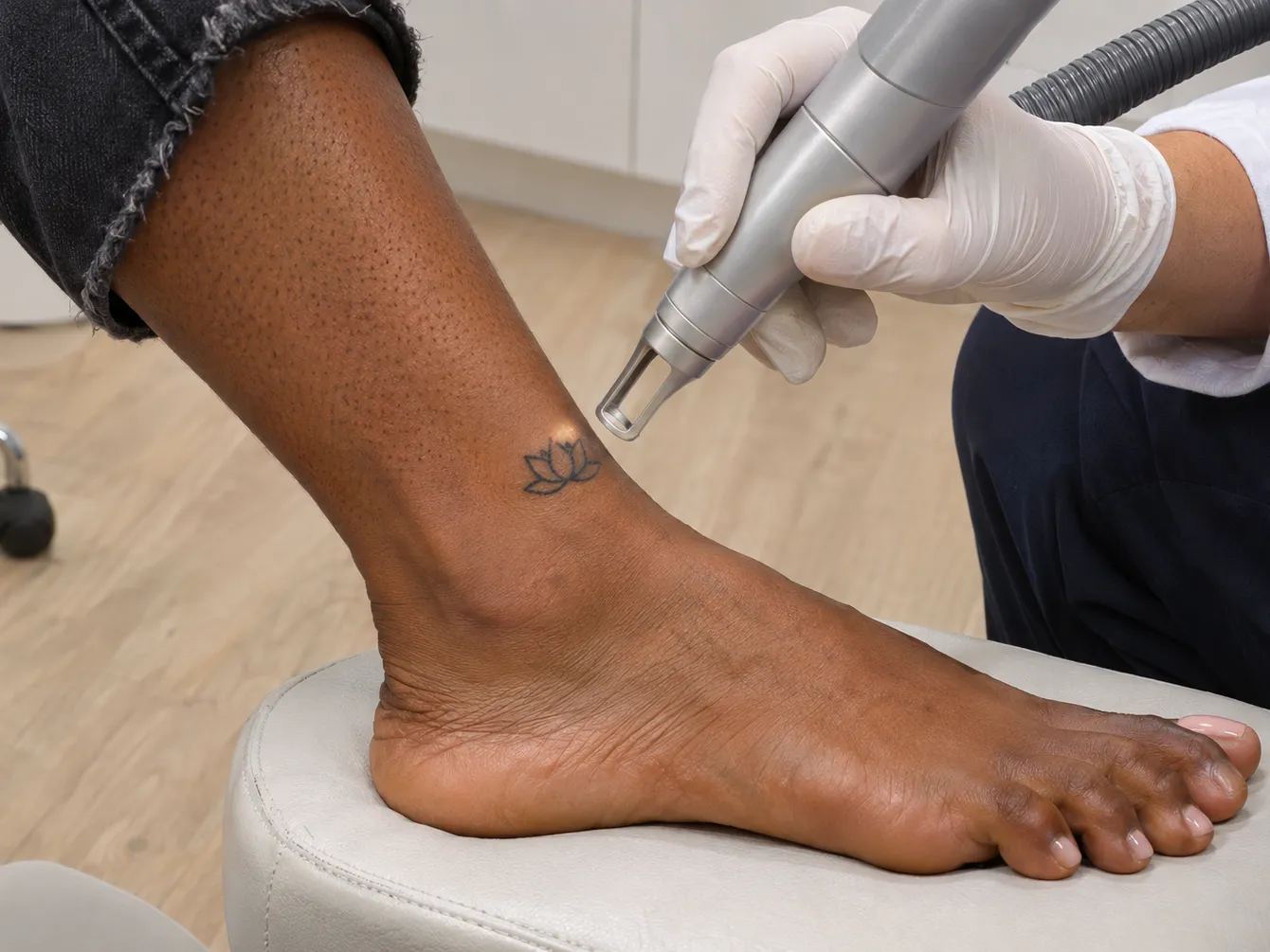
Laser tattoo removal comes wrapped in confident phrases: "works on any ink," "gone in a few sessions," "no trace left." Each phrase is a claim, and each claim has a question behind it.
Cleveland Clinic says laser tattoo removal uses pulses of light directed at your skin to remove unwanted tattoos. That is the plain definition. Everything advertised on top of it needs its own support.
The questions, sorted by the claim they test
Claims about who and what responds
- A "works on every color" promise is tested in Which tattoo ink colors respond well to lasers?
- An "anyone can do it" promise is tested in Who is a good candidate for tattoo removal?
Claims about time and results
- A fixed session count is tested in How many visits does laser tattoo removal take?
- A "gone completely" promise is tested in Will a laser remove my tattoo completely?
Claims about method and alternatives
- The "how it works" pitch is tested in How does a laser break down tattoo ink?
- Shortcut claims are tested in Are tattoo removal creams worth trying at home?
- The premise behind every sales pitch is tested in Why are tattoos so hard to remove?
What holds up across the answers
Answers on this topic stay tied to published medical sources. The American Society of Plastic Surgeons covers tattoo removal risks and safety, and NewYork-Presbyterian keeps a tattoo removal entry in its health library. A provider's promise that goes further than sources like these is marketing copy until it is shown otherwise.
Where this topic overlaps with others
Questions about who performs the treatment belong to the choosing a med spa topic, because a tattoo removal offer is only as reliable as the setting that delivers it. Readers weighing light-based skin treatments against needle-based ones will find the neighboring claims in the microneedling topic.